
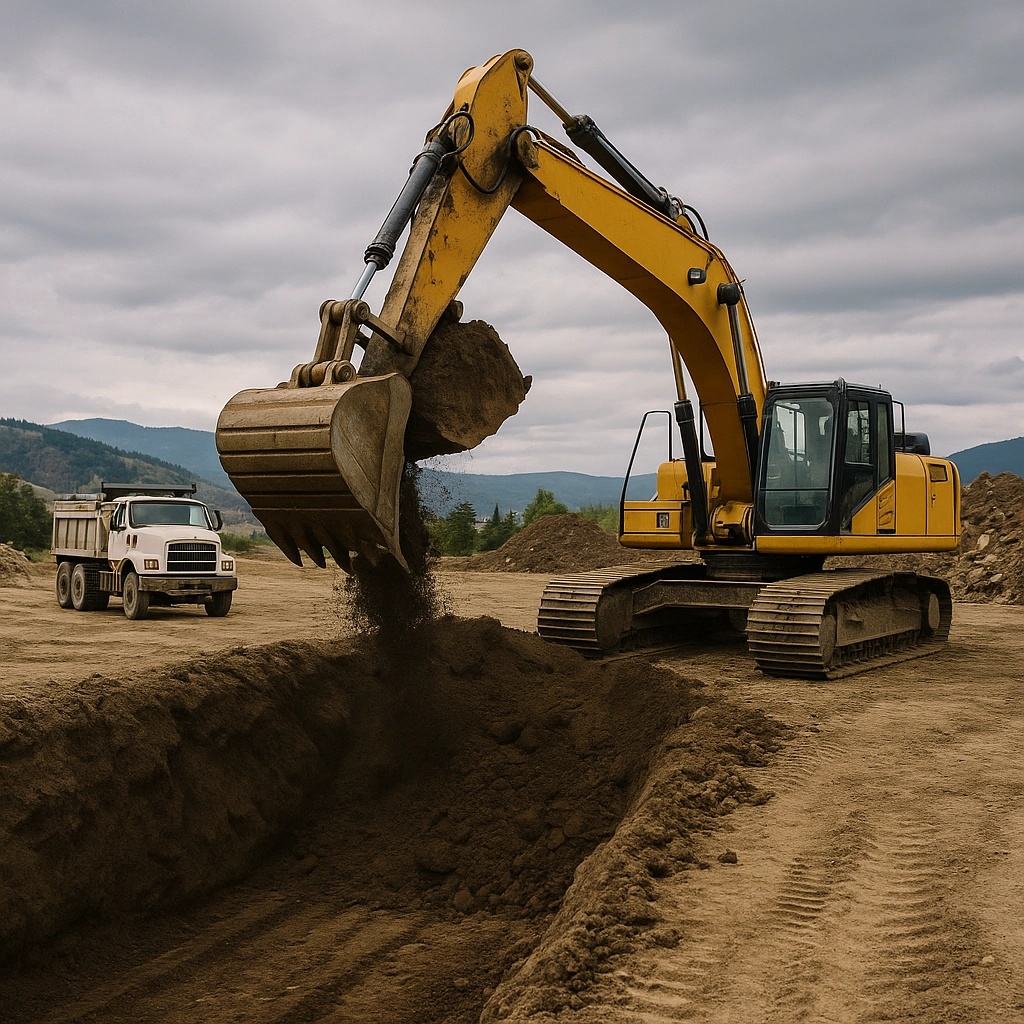
How to Plan a Residential Teardown in Kelowna: Timeline, Permits, and Costs
Thinking about removing an older home to make way for a custom build or major redevelopment? A residential teardown is often the cleanest way to start fresh—but it also comes with permits, timelines, and budget considerations that are easy to underestimate.
At TNT Kelowna, we handle residential teardowns throughout the Central Okanagan, coordinating demolition, trucking, and site prep so your project moves smoothly from existing house to build-ready lot. This guide walks you through the key steps: how far in advance to plan, which permits and locates are needed, and what really drives cost on a teardown in the Kelowna area.
Step 1: Decide If a Teardown Is the Right Move
Before you start permit applications, confirm that a full teardown makes more sense than a heavy renovation. Factors to consider include:
- Age and condition of the structure: Major foundation issues, extensive rot, or past fire/flood damage often push projects toward teardown.
- Layout and zoning: If your ideal new home footprint doesn’t align with the existing structure or setbacks, starting from scratch is usually easier.
- Hazardous materials: Older homes may contain asbestos, lead paint, or other materials that require abatement either way—renovations can be more complicated than a complete removal.
- Long-term value: A new, purpose-built home may better match your lot, neighbourhood, and future resale plans.
If you’re unsure, we’re happy to walk the site with you and your builder to discuss pros and cons of teardown versus renovation.
Step 2: Understand Permits, Locates, and Disconnects
In Kelowna and surrounding communities, residential teardowns generally require:
- Demolition permit: Issued by the local municipality. Your designer or builder may apply on your behalf, but you should confirm who’s responsible.
- Utility disconnects: Gas, power, water, and telecom services must be safely disconnected or terminated. This often involves lead times with each provider.
- Underground utility locates: A BC One Call ticket and private locates (where applicable) help identify buried services before equipment arrives.
- Abatement clearance: If asbestos or other hazardous materials are present, an environmental contractor must complete abatement and provide documentation before demolition.
At TNT, we coordinate utility locates and work closely with your builder, designer, and abatement contractor so permits and paperwork are in place before machines mobilize.
Step 3: Build a Realistic Timeline
A typical single-family residential teardown generally follows this sequence:
- Pre-planning (2–6 weeks): Design, zoning checks, permit application, abatement assessment, and early discussions with your contractor and demolition team.
- Permits, abatement, and disconnects (2–8+ weeks): Lead times vary by season and by municipality. Hazardous materials or complex utility situations can extend this stage.
- Demolition and debris removal (2–7 days on site): Once everything is cleared, most single-family teardowns are completed in a few days, including structure removal and debris hauling.
- Rough grading and site prep (1–3 days): After demolition, we shape the lot, manage spoils, and prepare for excavation, services, and future construction.
Season, access, weather, and site constraints can speed up or stretch timelines. During winter, pairing snow removal services with demolition can keep inspectors and trades moving despite snow and ice.
Step 4: What Really Affects Teardown Costs
Every site is different, but most residential demolition quotes in the Okanagan are shaped by the following:
- Size and type of structure: Larger homes, multiple stories, additions, garages, and outbuildings add to the scope.
- Access and logistics: Tight lanes, steep slopes, shared driveways, or limited truck access can require smaller equipment and additional mobilizations.
- Hazardous materials: Asbestos, lead, and other hazmat must be handled by a qualified abatement contractor before demolition. This is usually a separate line item from demo.
- Foundation and concrete: Removing basements, slabs, and driveways adds time and disposal cost—but also sets you up cleanly for new construction.
- Debris sorting and recycling: Sorting concrete, metal, and clean wood for recycling can reduce tipping fees and environmental impact.
- Distance to disposal and fill sources: Haul distances influence trucking time and fuel. Our in-house trucking team helps control these costs.
We provide clear, site-specific estimates that outline what’s included—and call out allowances for unknowns like buried debris, rock, or unsuitable soils.
Step 5: Plan the “Next Step” After Demolition
Your teardown isn’t complete until the site is ready for the next trade. Many homeowners and builders choose to bundle services so there’s no gap between demolition and new construction. Common combinations include:
- Demolition + Excavation: Remove the existing house, then proceed straight into foundation digs, trenching, and drainage.
- Demolition + Trucking & Aggregates: Export spoil and debris; import structural fill, gravel, or base materials via our trucking fleet.
- Demolition + Landscaping & Final Grades: Once the new build is complete, our landscaping team can construct retaining walls, steps, and final grades.
- Demolition + Winter Access: On projects that run through colder months, our snow removal services keep access lanes, driveways, and strata roads safe for inspectors and trades.
Working with a single contractor that understands your site reduces handoffs, mobilizations, and scheduling headaches.
Step 6: Communicate With Neighbours and Strata
Demolition is noisy and busy, but good communication keeps things smooth. Before work begins:
- Notify neighbours and strata (if applicable) of planned dates and working hours.
- Confirm truck routes, parking, and any temporary restrictions with your contractor.
- Discuss dust control, fencing, and signage with your demolition team.
Our crews are used to working in established neighbourhoods and multi-unit settings. We focus on respect for neighbours, safe access, and a tidy site at the end of each day.
Service Area for Residential Teardowns
We provide residential demolition and teardowns across Kelowna and the Central Okanagan, including:
- Kelowna (Rutland, Glenmore, Black Mountain, Dilworth, Lower/Upper Mission)
- West Kelowna
- Lake Country
- Peachland
- Vernon
- Westbank First Nation
Residential Teardown FAQs
How far in advance should I contact a demolition contractor?
It’s best to involve your demolition team as early as possible—ideally while your designer or builder is finalizing plans. This allows time for permit applications, abatement, and utility disconnects, and helps align your demo date with excavation and construction.
Do I need a demolition permit for a house teardown?
In most cases, yes. Demolition permits are issued by the municipality. Your builder or designer may submit the application, but we can help outline what information is typically required so the process goes smoothly.
Who handles asbestos and other hazardous materials?
Hazardous materials must be assessed and removed by a qualified environmental contractor before demolition. We regularly coordinate with abatement partners so that remediation and demolition follow a single, coordinated plan.
How long will my teardown take once you start on site?
Most single-family teardowns are completed in a few days once permits, locates, and abatement (if needed) are complete. Larger or more complex sites, limited access, or extensive concrete can extend the schedule slightly.
Can you leave the lot ready for my builder to start right away?
Yes. We can bundle demolition with excavation, trucking & aggregates, and rough grading so your builder can move directly into layout, forms, and services.
Ready to Talk About a Teardown?
If you’re considering a residential teardown in Kelowna or the Central Okanagan, we’re here to help you plan it properly—from permits and abatement coordination to demolition, debris removal, and site prep for your new build.
Share your address, drawings, and preferred timeline and we’ll provide a clear scope and estimate tailored to your property.